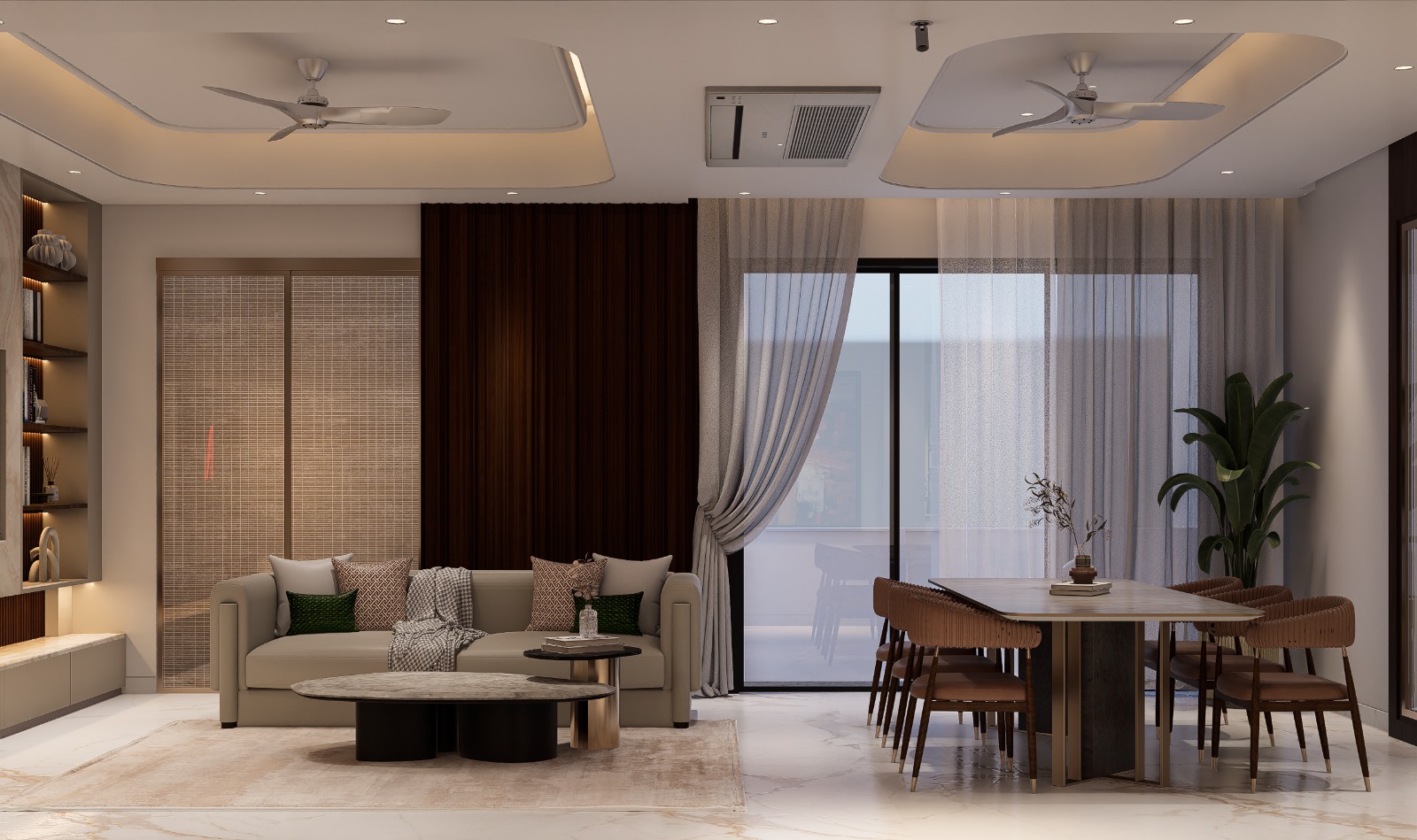
In an era where design trends travel faster than ever, architecture and interior spaces often risk becoming repetitive. Social media inspiration, global style movements, and pre-packaged aesthetics have made replication easy. However, meaningful architecture is never copied — it is carefully composed.
At our studio, we believe in creating environments that are curated, not replicated. Each project begins with an in-depth understanding of site conditions, climate, cultural context, and the client's aspirations. Instead of imposing a predefined style, we shape spaces that evolve from their surroundings and the people who inhabit them.
Architecture That Belongs to Its Environment
A curated architectural response begins with listening to the land. The slope, vegetation, wind direction, sunlight, and regulatory framework all influence the built form. When architecture responds to these parameters, it feels inevitable — as though it has always belonged there.
For instance, in regions like Goa, climate-responsive architecture is critical. High humidity, coastal air, and intense monsoon cycles require thoughtful planning. Deep overhangs, cross-ventilation, shaded verandahs, breathable materials, and moisture-resistant detailing are not stylistic decisions — they are functional imperatives. Ignoring these realities in favor of a replicated global aesthetic often leads to performance issues over time.
Similarly, in dense urban environments such as New Delhi, privacy gradients, heat mitigation, and noise buffering play a central role in shaping spatial planning. Architecture, therefore, must be responsive rather than formulaic.
Interior Design as a Reflection of Lifestyle
Interior design in a curated environment is not about decorating a shell. It is about defining how life unfolds within it. Every interior space should support daily rituals, encourage natural interaction, and balance openness with intimacy.
Instead of adopting trend-driven "modern contemporary" templates, we develop interiors that reflect the client's rhythm and personality. This may include custom furniture proportions, tailored lighting strategies, and material selections that align with both climate and lifestyle.
Key considerations often include:
- Movement flow between private and social zones
- Natural light behavior throughout the day
- Tactile material experiences
- Integrated storage that reduces visual clutter
- Spatial transitions that feel intuitive
When these aspects are thoughtfully resolved, the result is an interior that feels personal and timeless rather than staged.
Materiality with Long-Term Vision
Material selection is one of the most defining aspects of curated design. Beyond visual appeal, materials must be evaluated for durability, aging characteristics, and maintenance demands.
Locally sourced stone, solid wood joinery, lime-based plasters, and handcrafted metal details offer both aesthetic warmth and long-term resilience. In coastal projects especially, material intelligence directly influences performance. The goal is to create spaces that develop patina and character over time — not surfaces that require constant replacement.
A curated material palette typically prioritizes:
- Climate suitability
- Structural compatibility
- Sustainability
- Ease of maintenance
- Timeless visual quality
This approach ensures that the project remains relevant years after completion.
Integration of Architecture, Interior Design & PMC
Design excellence does not end at the concept stage. The transition from drawings to execution is where many projects lose integrity. A curated environment requires alignment between architecture, interior design, and Project Management Consultancy (PMC).
When these disciplines operate cohesively, design intent is protected through every phase. This integrated process allows for:
- Accurate cost planning and budget control
- Technical detailing precision
- Quality assurance during construction
- Vendor and contractor coordination
- Timely project delivery
Without structured oversight, even a strong design can become diluted. Integration ensures that what is envisioned is faithfully realized.
Luxury Redefined Through Authenticity
Luxury today is shifting away from excess and ornamentation. It is increasingly defined by proportion, spatial clarity, craftsmanship, and environmental sensitivity. A curated environment does not rely on imported finishes or decorative abundance. Instead, it emphasizes balance, restraint, and precision.
Such spaces reveal themselves gradually — through comfort, functionality, and atmosphere. They age gracefully and adapt to evolving lifestyles. Most importantly, they cannot be duplicated elsewhere because they are rooted in a specific site and a specific narrative.
Designing for Long-Term Value
For clients investing in high-value residential properties — particularly in dynamic markets like Goa — thoughtful architecture directly impacts long-term appreciation and usability. Curated environments typically offer stronger performance in terms of:
- Functional longevity
- Lower maintenance burden
- Market differentiation
- Enhanced rental and resale potential
Timeless design remains relevant long after trend cycles shift.
Conclusion: Intentional Design as a Differentiator
As architecture becomes increasingly globalized, the true differentiator is not style — it is sensitivity. Sensitivity to place, climate, culture, and client identity. Environments that are curated, not replicated, represent a commitment to intentional design.
They are composed with precision, executed with discipline, and experienced with depth.
For clients seeking architecture and interior design that transcend imitation, the future lies in thoughtful curation — where every detail has purpose and every space has meaning.